
KICKSTART
ORIGIN: Etiopia
LOCATION: Guji Megadu
PRODUCER: Bette Buna
VARIETAL:74112,74110, Wild Guji Magadu
PROCESS:Natural
ALTITUDE: 2000-2200
CUP SCORE: 87Cup
PROFILE: Blackberry, peach, skittles, cherry, passion fruit, floral.
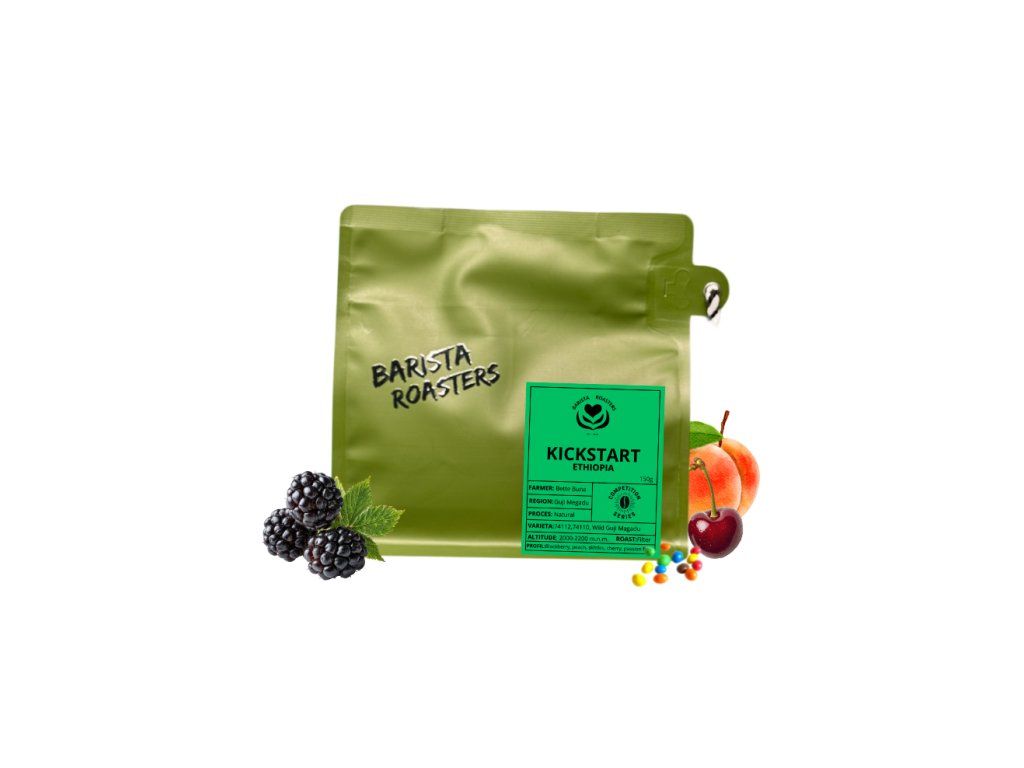


This lot comes from Bette Buna’s own farm in Guji Megadu.
In Guji, the ripe cherries develop an intense red colour and are typically easy to pick. Despite this, Megadu faced significant challenges this year due to a shortage of farm labourers. As a result, Bette Buna lost a considerable portion of the harvest, with many ripe cherries left unpicked.
The ‘Kickstart’ process was developed by the processing team at Bette Buna as a way to concentrate sugars and subtly alter their structure before the standard natural processing begins. After delivery to the wet mill, the cherries are given a “kick” by being placed in an anaerobic environment for a short period. This stage is not long enough for full fermentation to begin, but sufficient to initiate structural changes within the sugars. The result is a coffee with enhanced sweetness and body, layered over the classic Sidamo natural profile.
The coffee is then dried in the traditional manner on raised African-style beds. This method has now become a standard processing technique for the Bette Buna team, and the results speak for themselves.
Once the desired moisture level is reached, the dried cherry is bagged, tagged, and moved into storage to rest for a minimum of eight weeks. This resting period allows for greater complexity and intensity in the final cup profile. After local dry milling to remove the hull, the coffee undergoes a further round of hand-sorting to eliminate primary defects.
The green coffee is then transported by truck on a three- to five-day journey to Bette Buna’s main dry mill in Gelan, near Addis Ababa. There, the beans undergo additional cleaning, size and density screening, and colour sorting before being bagged for export.
Be the first who will post an article to this item!
Be the first who will post an article to this item!